How Branded Mats Protect Floors and Cut Cleaning Costs in Commercial Spaces
How Branded Mats Protect Floors and Cut Cleaning Costs in Commercial Spaces
Most businesses think of an entrance mat as a branding tool first and a practical fixture second. In reality, the maths often runs the other way — a well-chosen mat can meaningfully reduce what you spend on cleaning, floor repairs, and replacement over time, while the branding comes along as a bonus. Here’s how that actually works.
Most Dirt Enters a Building Through the Front Door
Studies on commercial cleaning consistently point to the same thing: the majority of dirt, dust, and grit inside a building is carried in on footwear. Without a mat to intercept it, that dirt gets tracked across floors, ground into carpets, and spread through hallways — all of which adds directly to cleaning time and cost.
A mat placed at the entrance interrupts that process at the source. Instead of dirt travelling further into the building, it gets trapped in the mat’s fibres or loops, where it can be vacuumed or hosed out rather than embedded into your flooring.
Less Grit on Floors Means Less Wear on Floors
Dirt and grit aren’t just unsightly — they’re abrasive. Every footstep that grinds sand or dust into a tiled, vinyl, or wood floor causes tiny amounts of surface wear. Over months and years, this adds up to visible scratching, dulling, and premature wear that eventually requires refinishing or replacement.
A mat that traps grit before it reaches the floor reduces that abrasive wear significantly. It’s a small, ongoing protective layer between your flooring and the traffic moving across it — cheaper to replace a mat every few years than to refinish or replace flooring sooner than necessary.
Moisture Control Matters as Much as Dirt Control
Rain, spilled drinks, mopping residue, and general moisture create a different problem: they make floors slippery and encourage the growth of mould or mildew in poorly ventilated entrances. A mat designed to absorb and hold moisture — rather than let it sit on the surface — reduces slip risk and gives moisture somewhere to go before it spreads further into the building.
This is particularly relevant in South Africa’s rainy season, when entrances that don’t have adequate matting can end up with genuinely hazardous wet-floor conditions during and after storms.
The Cleaning Cost Angle
Every bit of dirt and moisture that a mat intercepts is dirt and moisture your cleaning staff don’t have to deal with elsewhere in the building. In practice, this shows up as:
Less frequent floor cleaning required in areas immediately past the entrance
Reduced product usage — less need for heavy-duty degreasers or stain treatments on floors that would otherwise take the brunt of tracked-in dirt
Fewer hours spent on deep cleaning, since regular light maintenance (vacuuming or shaking out the mat) handles most of the problem before it becomes a bigger job
Lower long-term flooring costs, since floors experiencing less abrasive wear and moisture damage need refinishing or replacement less often
For a business with consistent foot traffic — retail stores, offices, schools, hospitality venues — these savings tend to compound over the life of the mat, often outweighing the mat’s original cost within the first year or two.
Choosing a Mat That Actually Delivers on This
Not every mat performs equally well here. A thin, decorative mat with minimal dirt-trapping capacity looks fine on day one but doesn’t meaningfully reduce what reaches your floors. To get real protection and cost savings, look for:
Sufficient surface area — a mat that’s too small won’t catch enough foot traffic before people step past it
A material suited to your specific conditions — heavier-duty coil or rubber constructions for outdoor or high-moisture entrances, structured carpet-style mats for indoor, lower-moisture areas
Non-slip backing — a mat that shifts underfoot creates a new hazard rather than solving one
Durability that matches your traffic volume — a mat rated for light use will wear out and stop performing well before a heavier-duty option would
Branding as the Bonus, Not the Only Reason
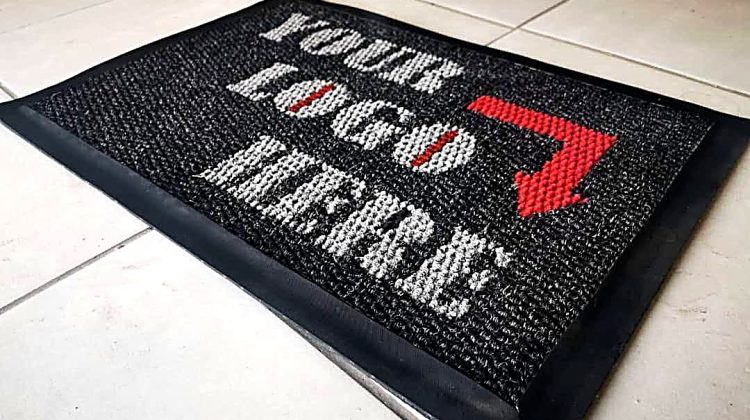
None of this is to say branding doesn’t matter — a mat featuring your logo does real, ongoing work for brand recognition every time someone walks across it. But framing a branded mat purely as a marketing expense undersells it. Done right, it’s a floor protection investment that happens to carry your branding, which makes it easier to justify from a facilities or operations budget as well as a marketing one.
The Bottom Line
A well-chosen entrance mat isn’t just about first impressions — it’s a practical, cost-effective way to reduce cleaning workload, protect flooring from long-term wear, and manage moisture-related safety risks. For any commercial space with regular foot traffic, it’s one of the simplest facilities investments with a genuinely measurable payoff over time.