Rain, Mud, and Mess: How a Logo Mat Stops the Weather From Wrecking Your First Impression
Rain, Mud, and Mess: How a Logo Mat Stops the Weather From Wrecking Your First Impression
Walk into any business on a rainy Tuesday and you’ll see it immediately: wet footprints trailing across the floor, a puddle forming by the door, someone’s shoe squeaking on tile that used to be dry. Nobody plans for this moment, but it happens every single day, and what’s sitting at your entrance decides whether it turns into a minor inconvenience or a small disaster.
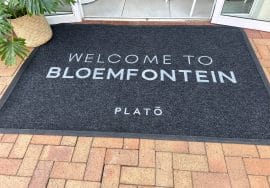
That’s really what a logo mat is for. Not just branding — though it does that too — but damage control for the one part of your building that takes the worst beating: the front door.
Weather Doesn’t Care About Your Floors
Rain, snow, mud, road salt in the winter, pollen and grass clippings in the spring — all of it ends up on someone’s shoes, and all of those shoes end up on your floor. A plain, worn-out mat (or worse, no mat at all) just lets that mess spread straight into your lobby, your showroom, or your dining room.
A good logo mat catches most of that before it gets past the threshold. It traps moisture so people aren’t sliding around five feet past the door. It scrapes grit off soles so your tile or hardwood isn’t getting sanded down every time it rains. And it does this quietly, every day, without anyone thinking about it — until it’s missing, and suddenly there’s a mop bucket out and a “wet floor” sign propped up where your welcome sign should be.
The Branding Part Is a Bonus, Not the Point
Here’s the thing people miss: you need a mat there regardless. Every business with a door gets rained on eventually. So if you’re going to put something at your entrance anyway, why not have it say your name?
Think about the last time you walked into a hotel, a dealership, or even a small local shop and noticed a sharp, clean logo mat right at the door. You probably didn’t think much of it in the moment. But you’d absolutely notice if it wasn’t there — if the mat was frayed, dirty, or missing altogether. That gap gets read as neglect, even if everything else about the place is fine.
What Actually Makes One Worth Buying
Not every logo mat holds up the way you’d hope. A few things matter more than people expect:
Material comes first. Outdoor entrances that take real weather need rubber-backed mats built for moisture — nylon or olefin fibers that won’t mildew or curl at the edges. A mat designed for a quiet interior hallway will fall apart fast at a door that sees actual rain.
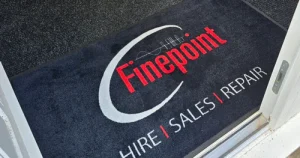
Contrast matters more than people think. A logo printed in a color close to the mat’s background practically disappears once foot traffic and a little dirt dull the surface. Bold, high-contrast designs still read clearly months later.
Size should match the doorway. A mat that’s too small looks tacked-on. You want something wide enough to catch both feet on a normal stride and long enough that people take at least two steps across it before hitting your interior floor.
And don’t treat it as a one-time purchase. Mats fade, fray, and mat down over time — especially the ones doing real work at a rainy entrance. Planning to replace it every year or two keeps it working for you instead of becoming the thing dragging down an otherwise clean space.
Where It Matters Most
The obvious spot is the front door, and it’s still the most important one. But a few other places pay off just as much: reception desks, where it reinforces the brand right as someone walks up to check in; trade show booths, where a branded mat makes an otherwise generic space feel intentional; and employee areas behind counters, where an anti-fatigue mat protects staff standing for hours while still carrying your name.
The Takeaway
A logo mat isn’t going to save a bad website or make up for poor service. But it solves a real, physical problem — wet floors, tracked-in dirt, slip hazards — while doing something for your brand at the exact moment someone walks in the door. It’s cheap, it’s low-maintenance, and it works whether or not anyone consciously notices it.
The businesses that get this right aren’t thinking about branding when they buy one. They’re thinking about the rain.